Artist Q & A Kirsty Macrae
/Kirsty Macrae
HCA: Can you tell us a little about your background as a painter and how this influences your work now?
Kirsty: I graduated from The Glasgow School of Art in 2009 having completed a degree in Fine Art: Painting & Printmaking. I was fortunate to have been able to study there before the devastating fire in 2014 which destroyed the world-famous building designed by Renee Mackintosh. I’ve continued painting ever since, and more recently revisited printmaking in the form of aquatint. This training and interest feeds into every aspect of my creative practice.
HCA: What materials do you use and why?
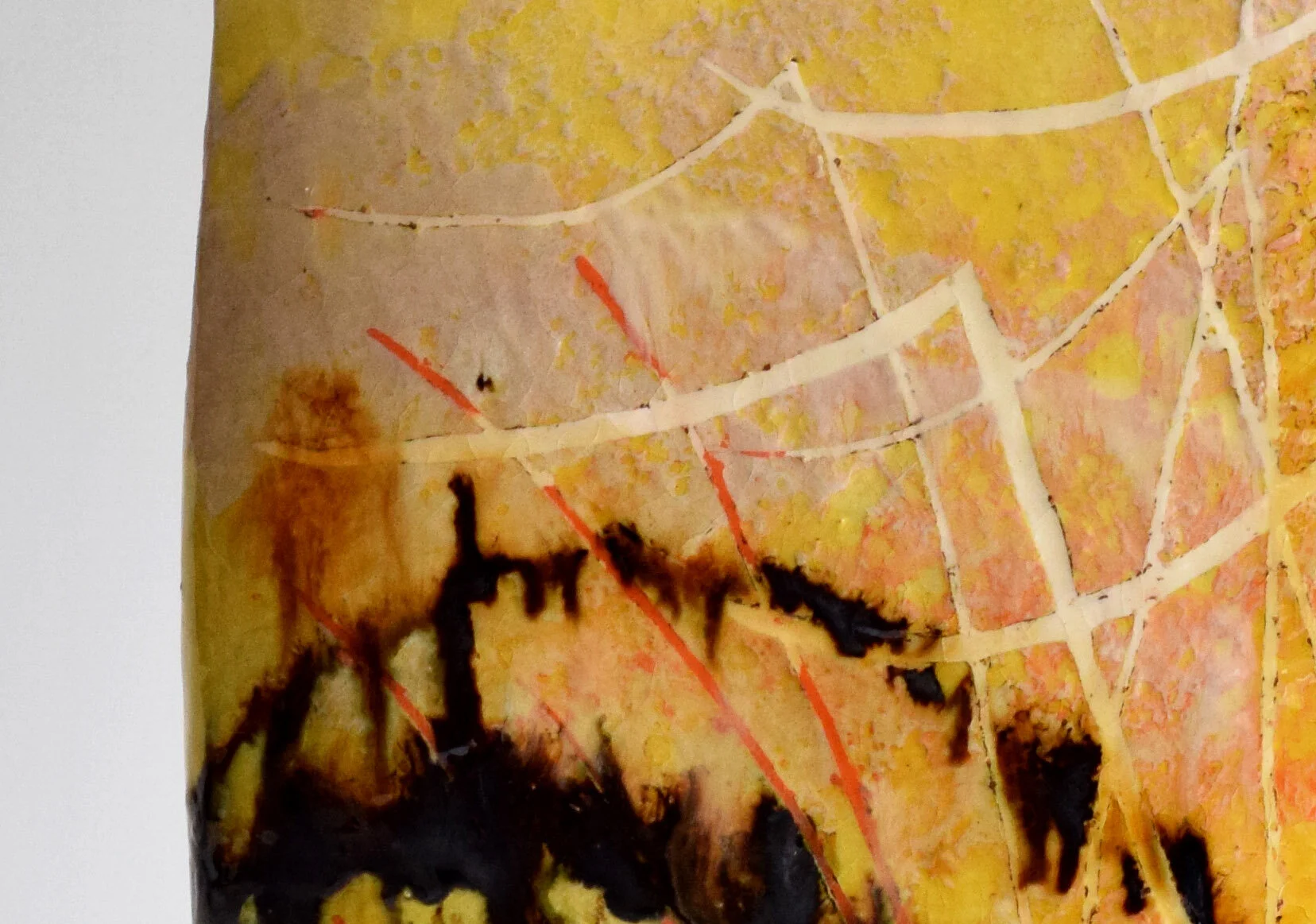
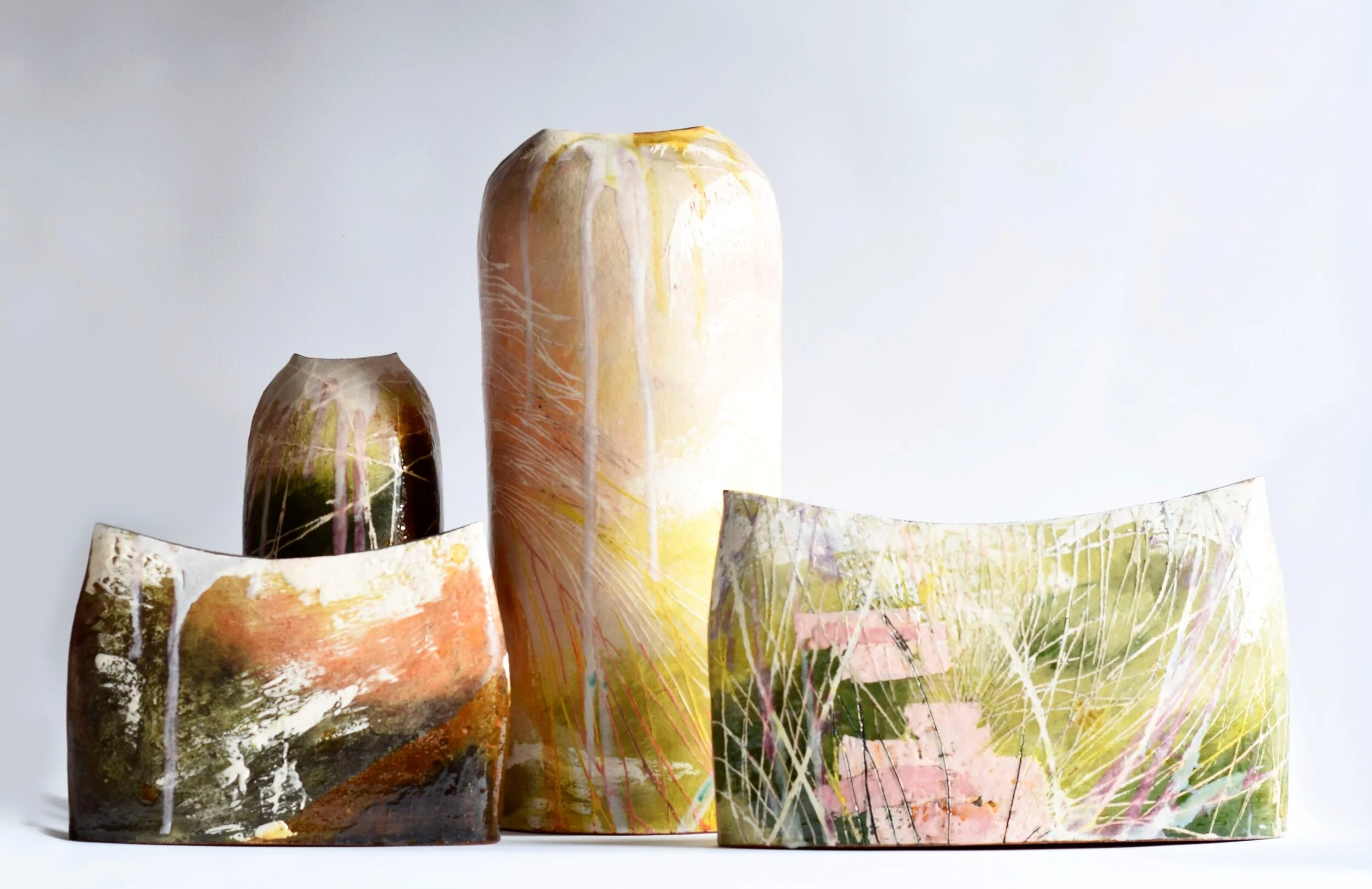
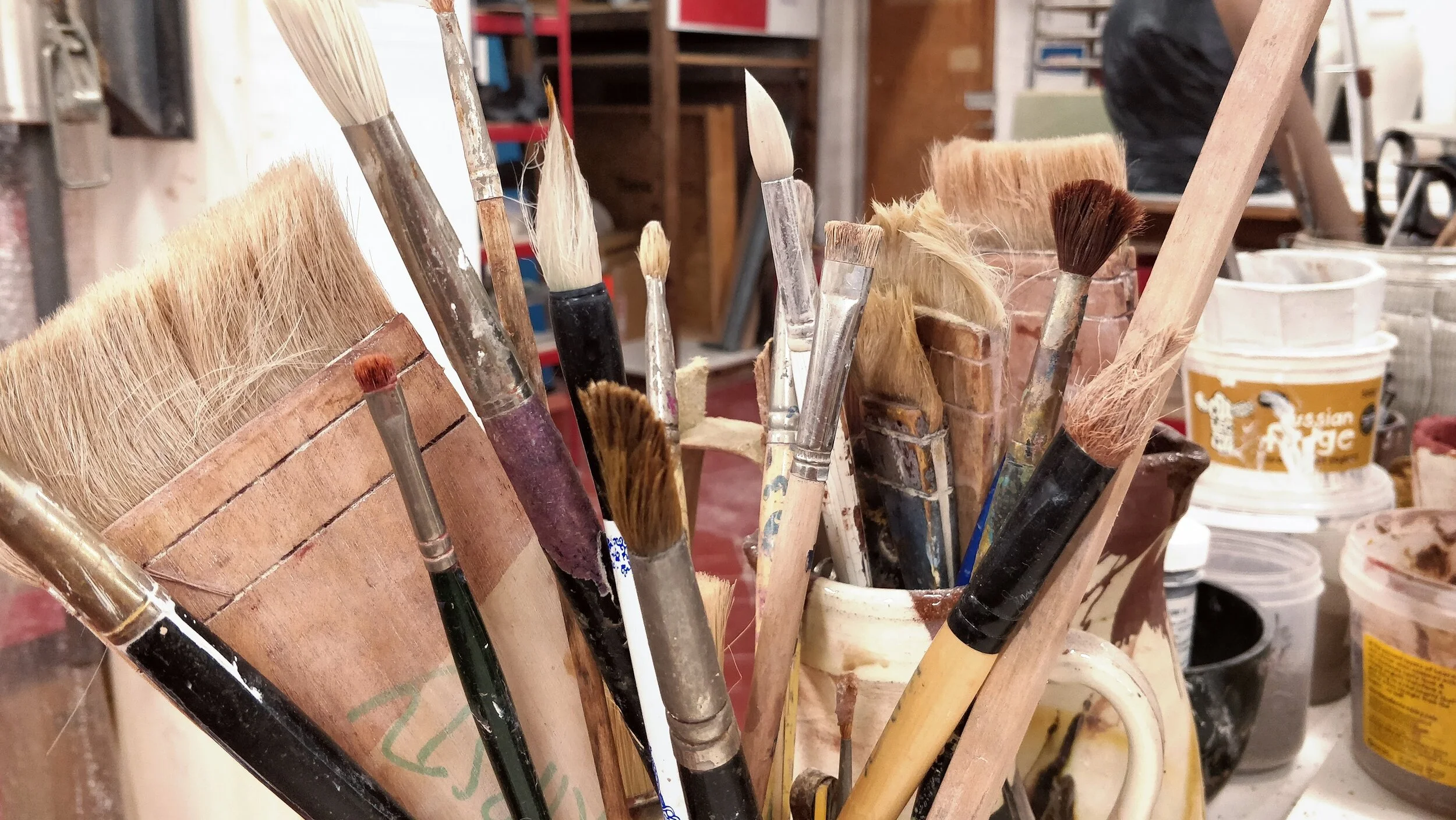
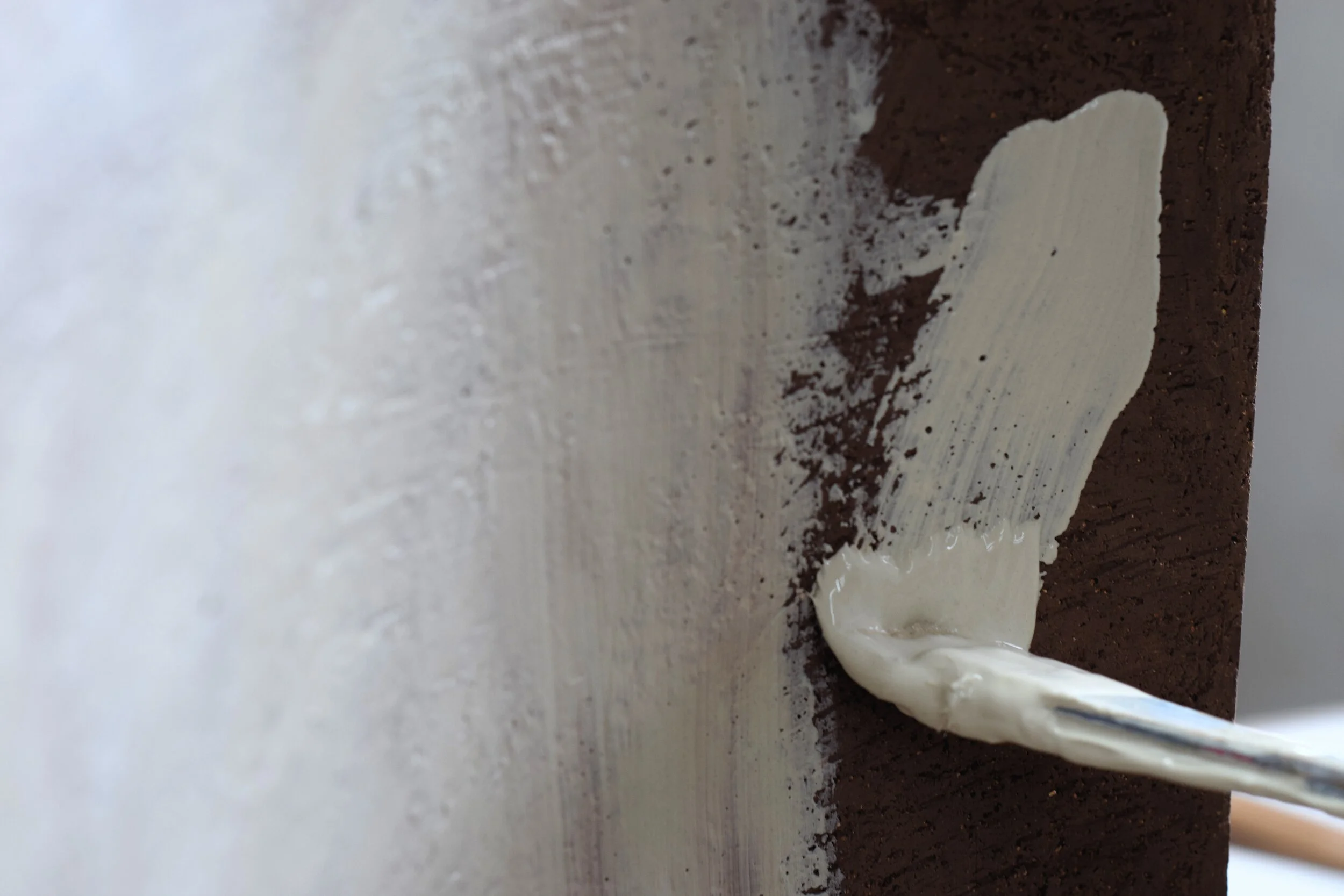
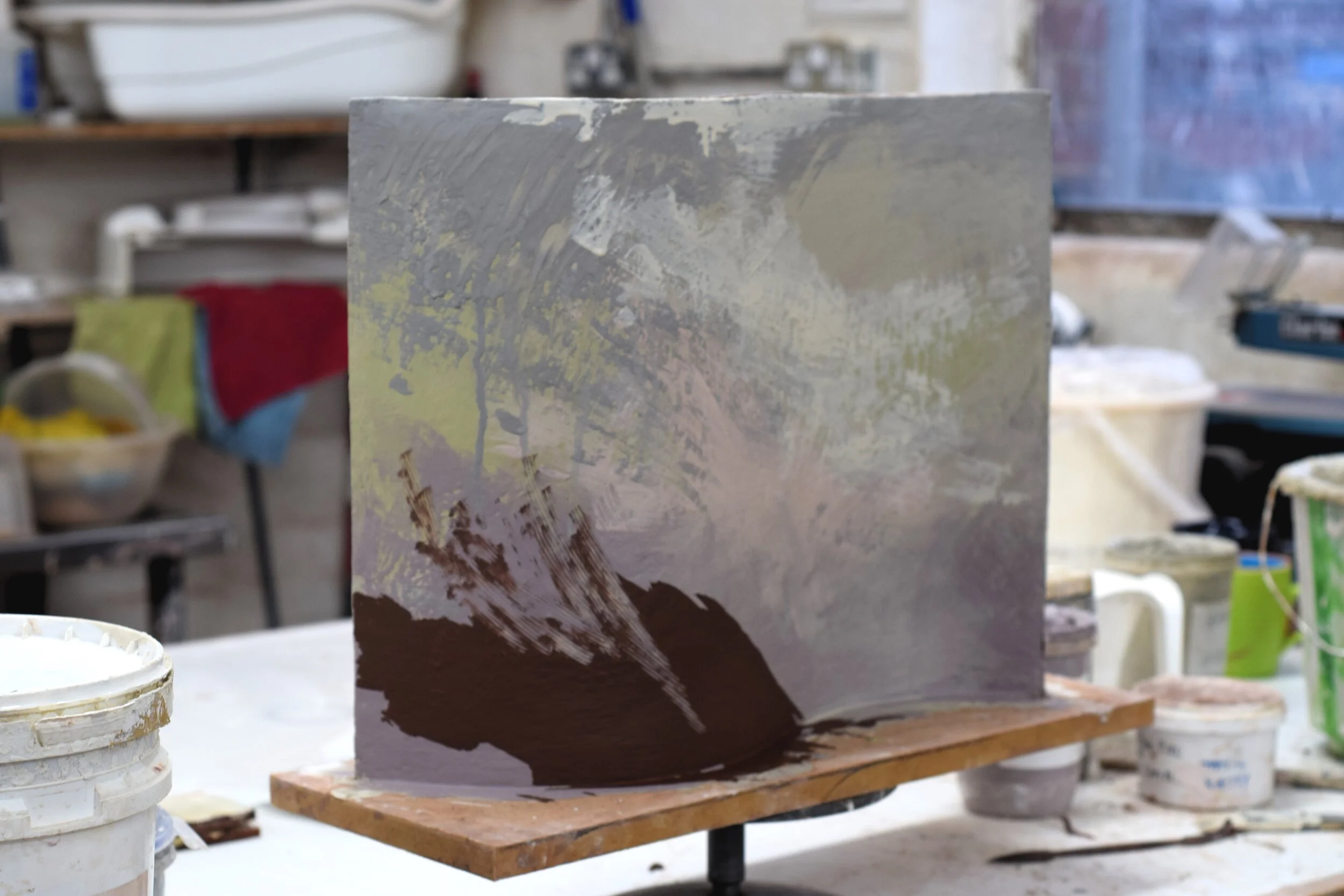
Kirsty: When I started working with clay, I knew I wanted to work with colour and incorporate painting into the process. As I began learning more about various types of pottery, I discovered English slipware, which has a very distinct, almost expressionist style using liquid clay, and I wanted to try it. So I started using the characteristic red earthenware clay which was used in this work, and mixed up some honey coloured lead-based glaze and some white slip (liquid clay). Over time I have expanded my palette out into over 30 colours of slips and glazes, which has created my voice with the material.
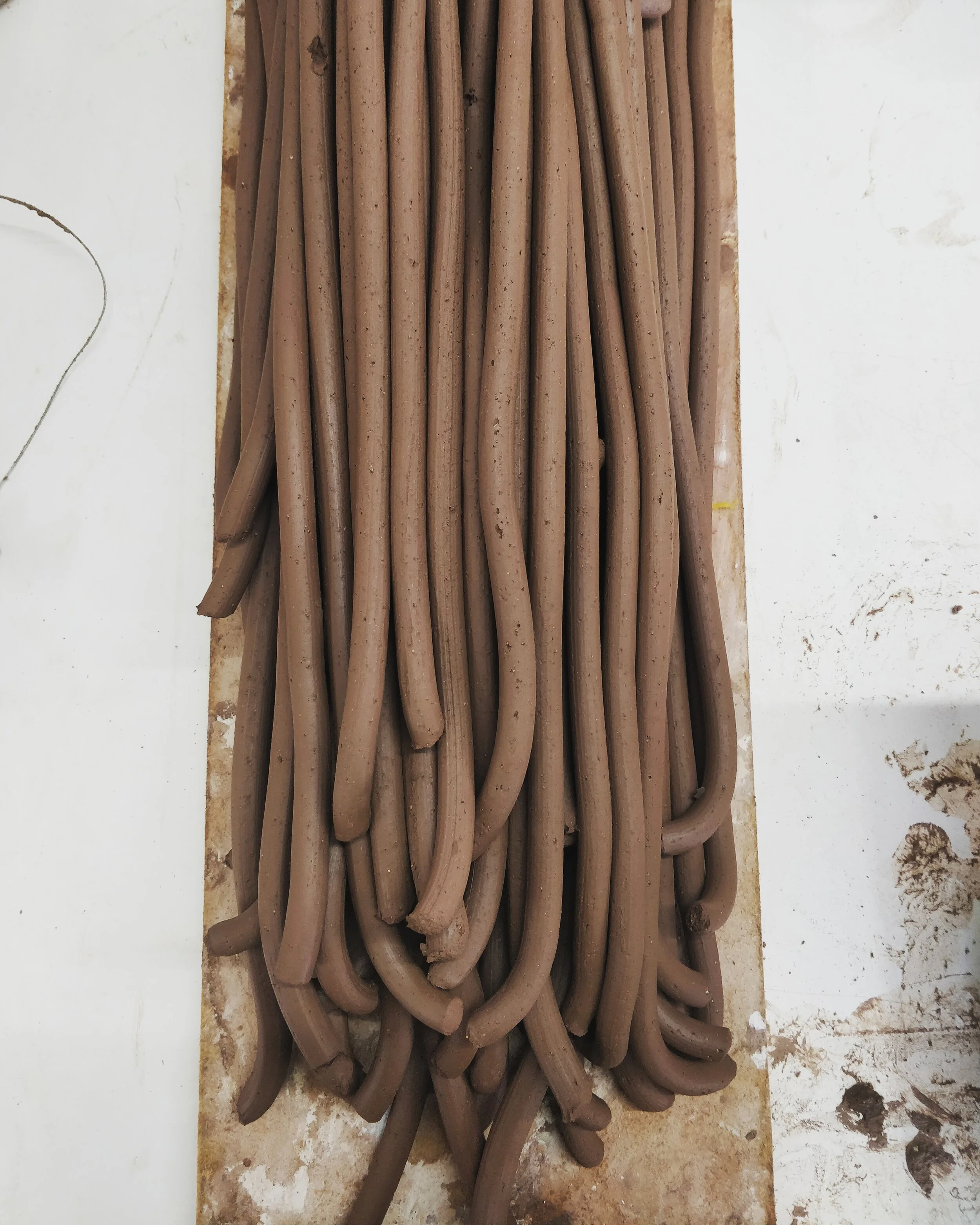
I think that a part of what craft is about is showing a material off to it’s a best ability. Clay can do so much, and I want to show this in various ways, whether that is mastering coiling, developing tons of colours, using thick porcelain slip in an impasto style, or forcing glazes to run. I’m interested bringing those qualities out rather than reigning them in. So the pieces for me end up reappropriating all sorts of styles, mashed together, which makes it personal to me.
HCA: What made you focus on ceramics?
Kirsty: A couple of years after graduating, I moved to Newcastle-upon-Tyne with my partner Adam Ross, who I met at art school. During this time, Adam opened the Thomas Ross Pottery and taught evening and weekend classes there. Quite separately, and on a whim, I decided to enrol in a local ‘Sculpting from Life’ course and absolutely loved it. We were using a cheap air-drying clay, but I felt that the material freed me up because it’s fundamentally so difficult. Adam suggested that I should come along to his pottery after the course ended and have a go with some proper clay. So, I started making work in my spare time, and began to learn about the material and technical processes. Since this point, I have continued to develop my work and brought together my interests in both painting and clay.
HCA: What is it about 18th century English Slipware pottery that inspires you?
Kirsty: I started looking at the work of more contemporary makers like Simon Caroll, whose work also stems from the traditions of making from English slipware. At this point I didn’t even know what slipware was, and first time I saw this type of pottery I thought it was so ugly! But it also seemed so radical to me. It’s very simple too- a good clay, a slip and a glaze can create endless opportunity for forms and mark making.

HCA: Is there a specific colour palette that you like to work with?
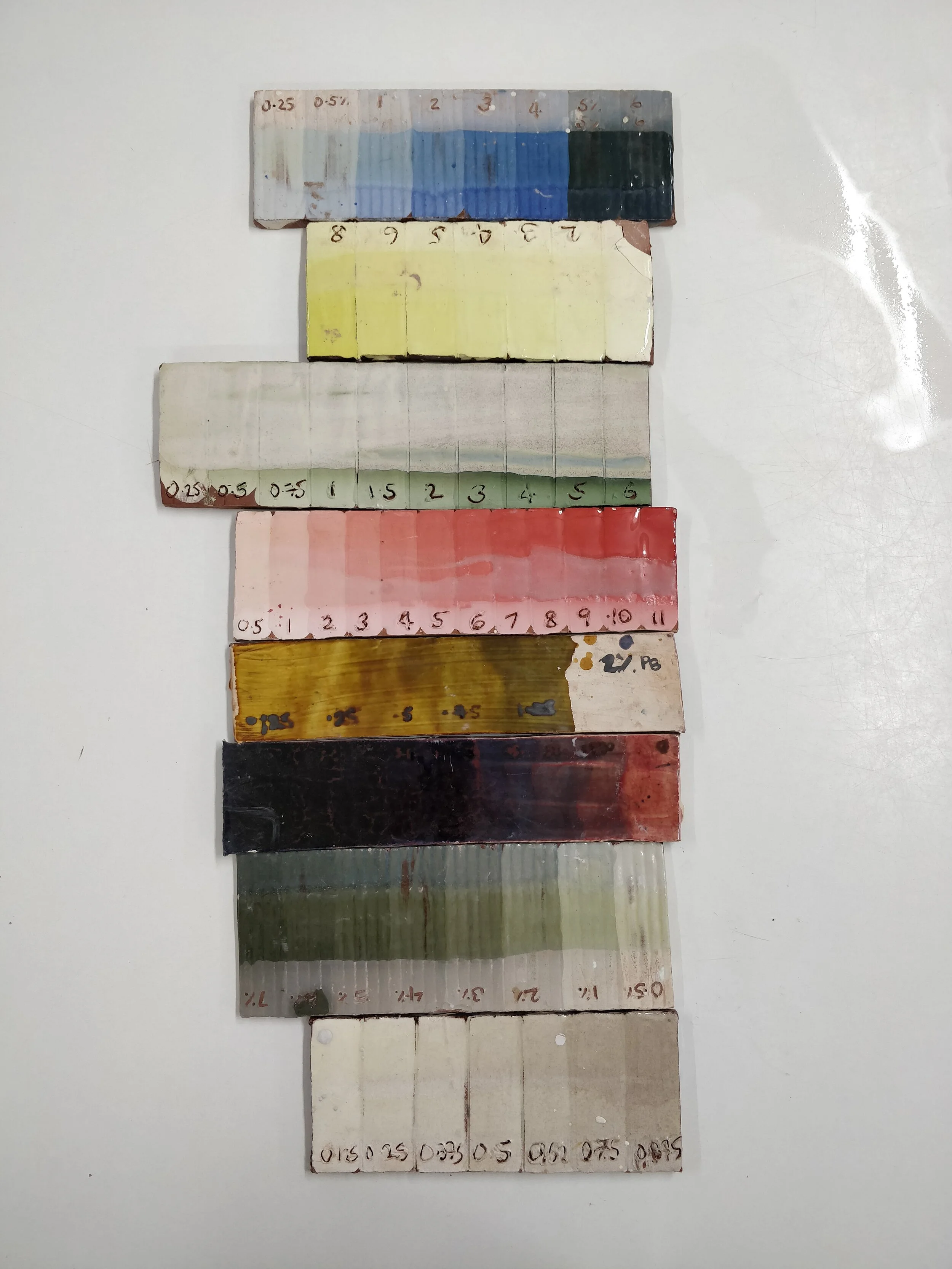
Kirsty: I have a huge interest and love for colour. I’m particularly interested in developing new colours, and I am very disciplined in producing tests to discover new shades and finishes. A great inspiration for my palette are impressionists like Joaquin Sorolla, as well as Japanese Woodblock artists, who both knit together bright colours with subtler hues to express light and place. I think that other interests like landscape and music all feed into my aesthetic too.
HCA: Your process is quite involved and each piece takes several weeks from start to finish, how did you come up with this method? It looks like it requires a lot of patience! I can imagine that seeing the finished piece is always an exciting moment!
Kirsty: Like many potters, the moment of opening the kiln is usually filled with trepidation but is often really exciting! My method of making is rooted in tradition but has evolved unconsciously over time into my unique practice. I try to play around as much as I can with the material and when happy accidents occur, I test rigorously to turn an accident into a reliable process that I can use and manipulate in my work. Of course, not everything always works out, and I throw away a lot of work that I don’t feel is successful. Editing is crucial.
HCA: What is your studio like?
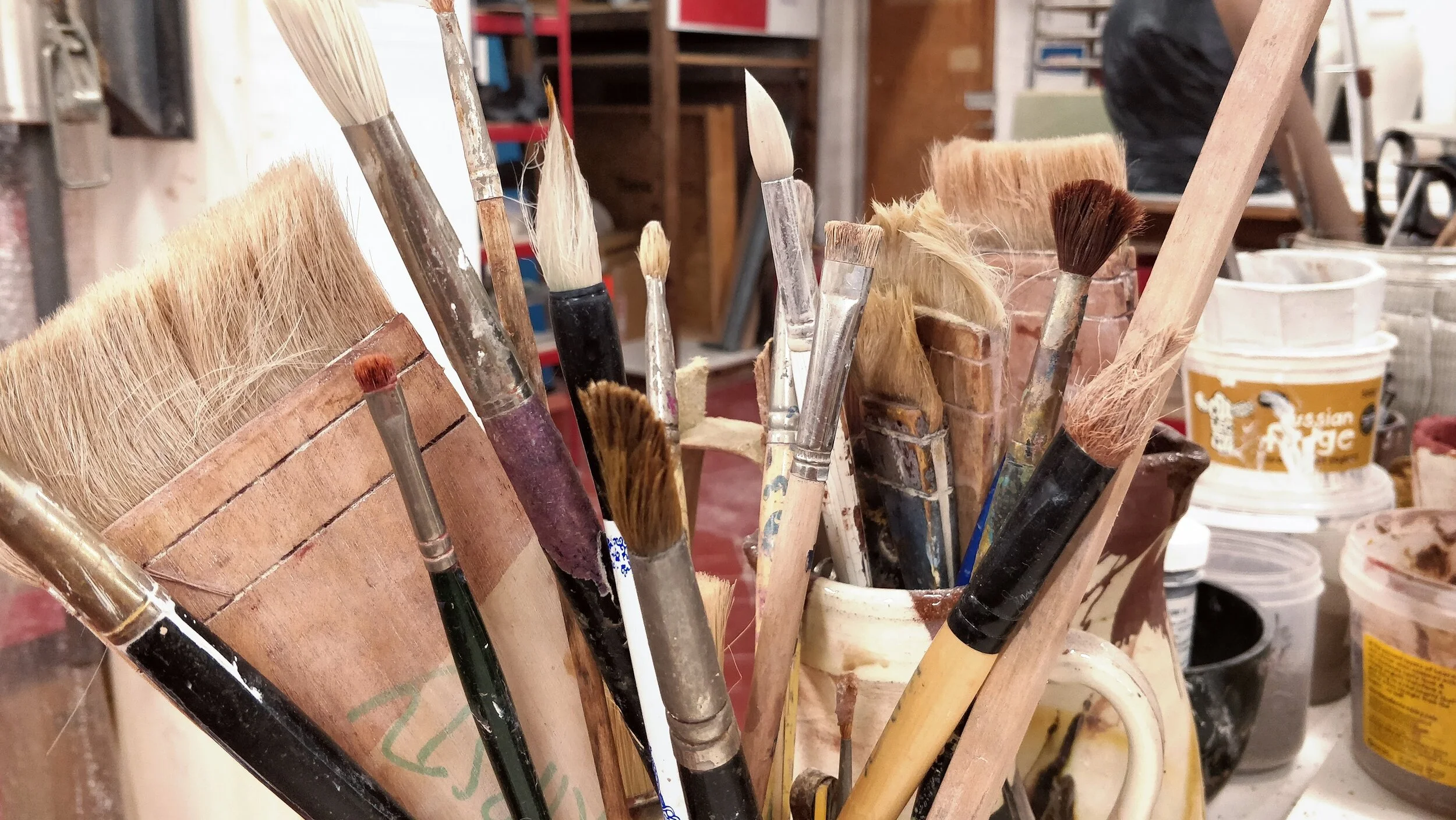
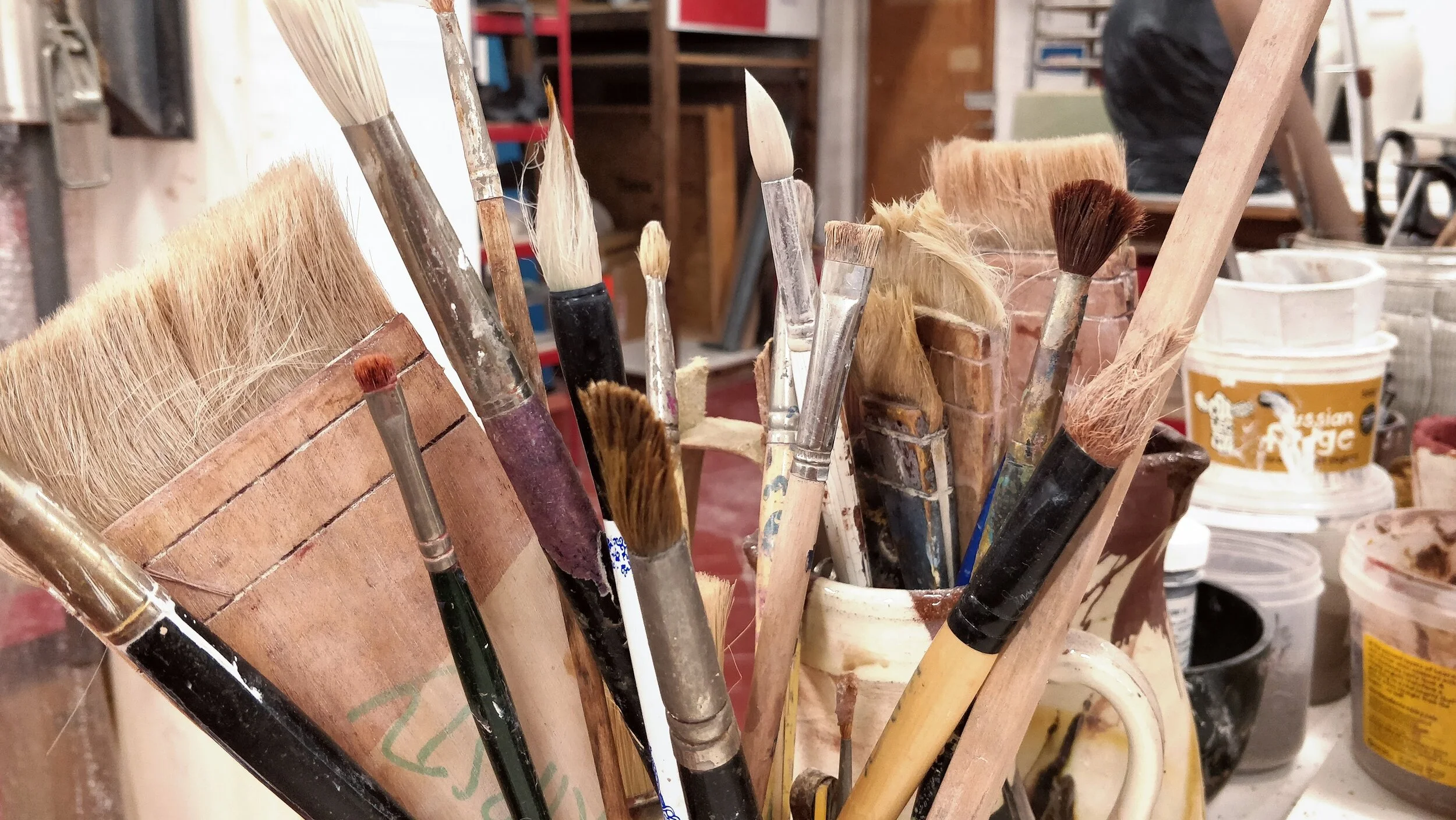
Kirsty: My studio is based in Wood Green in North London, which I share with a group of other professional potters. It’s a fantastic space which enables me to focus on my work in a creative place. It’s great to be around peers who can give advice and have a cuppa with.
HCA: How do you start each piece? Do you generally have an idea about the form and decoration of each piece before you begin?
Kirsty: It is necessary to do a lot of planning before I make a piece, particularly when it comes to the surface. The inspiration and starting point for my work is usually places I have been, or objects I have seen, which I then sketch and abstract. I often describe my making process as a bit like painting in the dark! Through the entire making phase, the coloured slips and glazes barely resemble the finished colours, in both shade and tonal value. So, it’s really important to have a reference point to work from, as well as a sound knowledge of the material and a good degree of imagination. On top of this, I work on several pieces at once, so I need to be able to keep track of what has been applied where! Contrasting with this degree of control, lots of my slips and glazes are made using metallic oxides which react with the glazes to produce magical and unpredictable interactions in the kiln. For example, one of my greens is made using Chromium Oxide, which interacts with Tin produce pink flashes once fired. This relationship between control and the uncontrolled in ceramics really motivates me.
HCA: Are there any specific artists or potters (past or present) that inspire you?
Kirsty: When I was a teenager, the Tate Modern had just opened, and my mum and dad let me travel into London on my own to visit it. I remember seeing a painting by Mondrian for the first time, and the experience became probably one of the most formative moments in my creative life. I had seen Mondrian’s famous abstractions before in books before but assumed they would be enormous, clinical and ‘perfect’. In the flesh, I was shocked, and to be honest disappointed at how small and rough around the edges the painting was. All of the brushstrokes were apparent, the white paint was yellowing, and the famous geometric lines weren’t very straight. It took me a long time to understand that it is all of those ‘imperfections’ make his, and others, work great for me. I now try to create work that has a physical presence and proudly leaves the mark of my hands and tools, because these are the qualities I love in artwork. At the moment, I’m really into the work of Willem de Kooning, Richard Diebenkorn & Alison Britton.